BIODIVERSITY

What is biodiversity?

Biodiversity can be defined as a variety of living organisms living amongst one another. Whether it’s a bird on a tree, or a sea cucumber roaming the ocean floor, they all partake in making earth flourish with its biodiversity. Biodiversity has a vast spectrum, ranging from species diversity, regional diversity, ecosystem diversity and genetic diversity. The ecosystem in a desert compared to the ecosystem in a rainforest is incredibly different. Biodiversity is constantly changing due to evolution, extinction and habitat degradation.

How can humans increase biodiversity?

To help conserve and increase biodiversity, we can:

  • educate ourselves about environmental issues
  • encourage and support local government initiatives
  • Eradicate and control weeds
  • Leave native plants undisturbed
  • Conserve water and reducing irrigation
  • Maintain old dead trees
  • Donate property to land trusts

Anything you do can help increase biodiversity, no matter how big or small the gesture is.

  Should humans try to increase biodiversity or should they let nature exist without our inteference? 

Humans should help increase the biodiversity to a certain extent. We are a major factor in the damaged ecosystems, so humans should help restore and repair it. We can help return animals to their natural habitat, plant trees and increase the endangered species population. Once the biodiversity is satisfactory, we should leave it alone and let it run its course.

Who makes the decisions about how much humans should intefere? 

We should decide whether we want to interfere with the biodiversity. There isn’t any authorisation about our interference in our day to day lives. We can make a difference by adjusting a few ways of how we live. If you choose to ignore this matter, it can affect our future and the future of Earth. Many organisations are spreading awareness and information, through blogs, events and news articles.

What technologies are used to monitor and improve our natural areas?  

In todays modern era, technology is often used to monitor and improve our natural areas. Some technologies used today are:

  • Camera traps- Remote cameras that are triggered when motions are sensored and will send the image to the operator.
  • Automated bioacoustic monitering devices- Similar to the camera traps, this device begins recording an animal through their sound.
  • Aerial imagery- An aerial view of a vast land can easily be seen through a drone, UAVs or a satellite. An aerial view can help count trees, species and analyse forest change.

Social Considerations of Technology

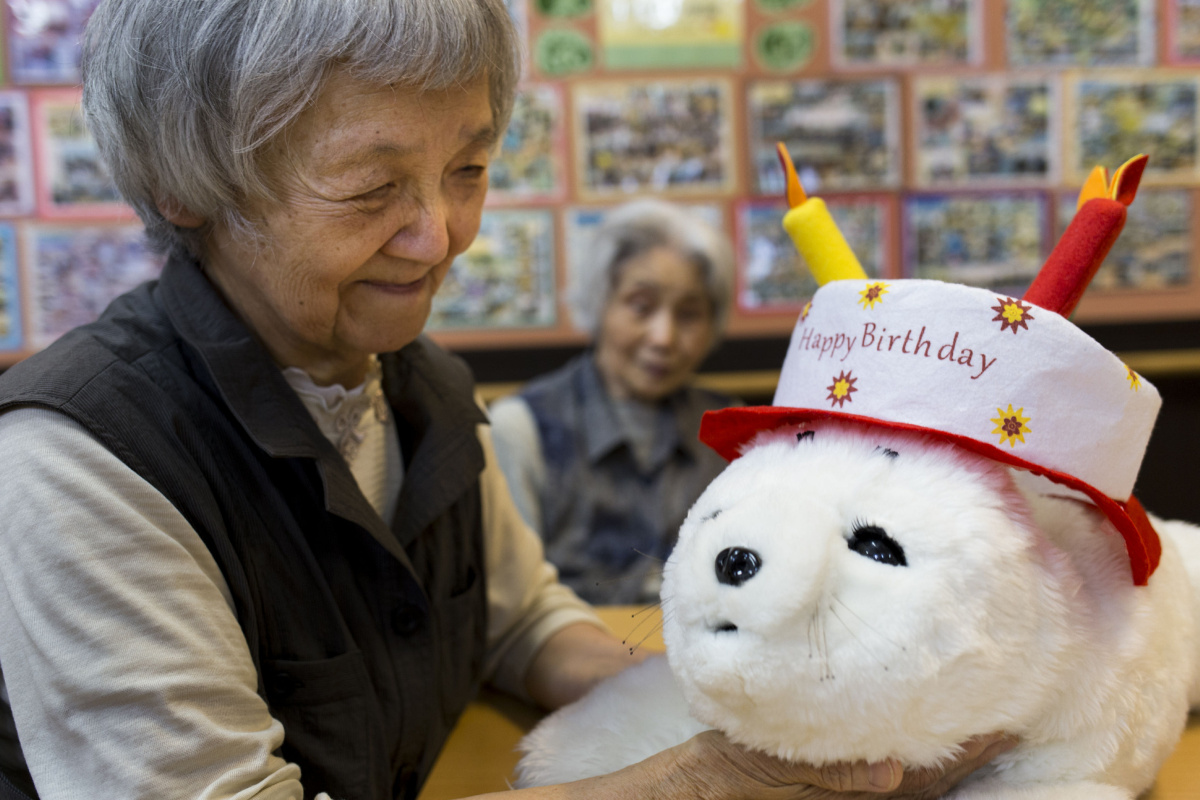
PARO

Why is the social aspect of technology important?

Socialising is one of the most important and basic aspects of human life. Social media has increased our ability to reach out and broaden our social lives as we can contact anyone from across the world. Some would say social media is just as important as breathing.

Function & Purpose of PARO

The Guinness World Record holder, PARO was developed by a Japanese company, AIST. PARO acts as a therapeutic animal for patients in hospitals or extended care facilities. It encourages socialisation with other patients and caregivers, reduces stress, and increases relaxation and motivation.

Cutting Edge Technology

The 8th-generation PARO has modifications, far more advanced than any other robot. It contains five types of sensors: tactile, light, auditory, temperature and posture sensors, which helps it adapt to people and the environment. It can remember positive and negative actions, and react according to the person. It’s aware when it is being held, stroked and the direction of voice due to all of its advanced sensors. PARO’s interaction with others are enhanced by acting as if it is alive. It imitates the sound of a baby seal and it can also move its head and legs.

What technology do we rely on during Covid-19 pandemic?

Social media usage has gone up astronomically during quarantine. Phones and laptops are nearly overheating due to its high usage. We can not go outside so we heavily rely on technology to entertain us. Since school is closed, students must get an education through the screen of their laptop, office workers are working from home, and friends are still contacting each other through social media as physical contact is not allowed. We also rely on our devices to update us about Covid-19, order food deliveries to support local businesses and to watch our economy crumble.

Has technology connected us better or worse?

Technology has definitely connected us better, especially through this tough time. Even if we’re locked inside our humble abodes, we’re still able to socialise and interact with friends and family. It allows us to facetime, text and even send voice messages. It is like the person is actually there with you. Everyone is able to share their experiences to millions of people with a simple click of a button. Good things always have their negatives, whom in this case, it is trolls or narrow-minded americans.

Covid Safe App

The 21st century is the era of technology and modernisation. Emerging technologies is a term used to describe new technology, whether it’s an advancement to an existing technology or a new innovative idea. Ethics is dealing with right and wrong or what’s good and bad, which might conflict ones’ morals and beliefs.

Most ethical considerations are built around these 5 guidelines:

1. Informed Consent

Informed consent is when the person is fully aware and informed of what they’re participating in. They should be informed of the purpose, fundings and every little details that may result from the evaluation plan.

2. Do No Harm

This guideline ensures that the participant isn’t harmed physically or psychologically. This can come in many forms such as; stress, anxiety, low self-esteem, pain or invasion of privacy.

3. Voluntary Participation

Participants are free to participate or withdraw anytime, without having to explain or feel pressured. Dropping out will not negatively impact their relationship with the researchers or future programs.

4. Confidentiality

Any private or distinguishable information about a participant can not be revealed or accessed by anyone except for the program coordinator. Their information is also prohibited from published documents and reports.

5. Anonymity

The identity of the participant remains unknown to the researchers so anonymity is a much stricter form of privacy than confidentiality.

COVID 19 TRACKER APP

The Australian government has recently developed a new app regarding the harrowing pandemic, Covid-19. Many Australians are wary of the app as it tracks your location and collects information. The Covid-19 app follows the first guideline, informed consent. The user completely knows what they are getting into by downloading this app. There are many official articles and guides regarding what happens to your data, what the app does, and possible advantages with using the app.

The app doesn’t exactly ‘do no harm’. The purpose of the app is to help prevent the spread of the virus and notify users if they were in close proximity to someone who has tested positive to the virus. This can bring some relief or serenity to some users, but to others who HAVE been near a Covid-19 person, it can cause a state of panic, stress and anxiety. The thought of contracting the virus can do some serious psychological damage.

Users are free to delete the app whenever they want with a simple click of a button. The app will be gone, but their data will still be stored in the system.

The app has safeguards in place to ensure that personal information is deleted and de-identified when its no longer needed. Their data is stored for up to 21 days and is later deleted. If a person contracts Covid-19, their data is automatically stored in the National Health Data Store which is worrisome as it is prone to cyber attacks.

The identity of a user is never revealed as it only tracks your location, but if a close friend is smart enough, they can put two and two together and figure out your identity based on your location.

I recommend using the app as it can help save lives and benefit the health of the vulnerable. Though the data storage system sounds a bit sketch, flattening the curve is more important so downloading the app and potentially getting your data accessed by the government is worth it. Everyone should be able to download the app, no matter their age.

How Engineers are Finding Solutions to Covid-19

Engineers all around the world are teaming up to help fight the infamous pandemic, Covid-19. The talented geniuses are innovating new ways to flatten the curve. Owners of 3D printers are printing ventilator masks and respiratory valves, among many other important equipment. Surgeons, engineers and anaesthetists at Oxford University and King’s College are joining forces to create deployable ventilators. Ones that meet the MHCRA criteria and can be manufactured in universities and small workshops.

Can 3D printing plug the US coronavirus medical equipment gap? - CNN

They aren’t the only people teaming up though. Apple and Google announced that the two companies will work together on an app to track the spread of Coronavirus using bluetooth. If someone you have been in contact with contracts the virus, an alert will be sent to your phone, followed by recommendations on what to do next.

Google Apple tracing website

Though the Coronavirus is keeping us distant from one another, it is also bringing us together, to fight this battle.

Technology used to fight fires summary

As technology advances, people have created alternatives to fight fires, without harming the environment, people or to help give more information beforehand.

Using virtual reality and haptic technology to train firefighters in battling a fire without leaving harmful chemicals behind was devised by an Australian entrepreneur

To prevent firetruck burnovers, firetrucks are now equipped with spray nozzles to act as a water curtain over the truck, radiant heat shields to block radiation from entering the cabin, water sprays for wheels and pumps and fire resistant covers equipment.

Drones are incredibly useful to fight fires because it doesn’t need a pilot and it can fly closer the ground. Drones have recently been used to drop ‘dragon eggs’ to create fire breaks.

Satellites are able to provide mapping information about where the fires are.

Using sound waves to extinguish fires are a new development made by two university students. Using low frequency sound waves are able to manipulate the oxygen and burning material around it so it separates and eventually dies out.

stem

  1. describe
  2. explain
  3. predict

photograph #1

the picture shows a group of people on a boat who seem distressed. Land can be seen not far from where they are situated. The sky is grey and foggy and it looks hot. The rear of the boat is facing towards the land so they are probably leaving and going somewhere else. I predict that they are evacuating something.

photograph #2

The sky is an apocalyptic red and its clouded in smoke. The girl is on a boat and is wearing a mask so she doesnt inhale any smoke. Shes controlling the boat as her hand is steering the motor. I predict that the bushfires must have pushed her to evacuate her town.

photograph #3

A painting of Scott Morrison on fire was graffitied onto a brick wall with him saying “this is fine” as a reference to a comic strip of a dogs house on fire who says the same thing. The piece of art was done by @LUSHUX. A great deal can be seen where new scooters are from ONLY $1.495, what a bargain. I predict this was done due to the fact that Scomo was on holiday in Hawaii during the bushfires and did nothing.

Design a site like this with WordPress.com
Get started